
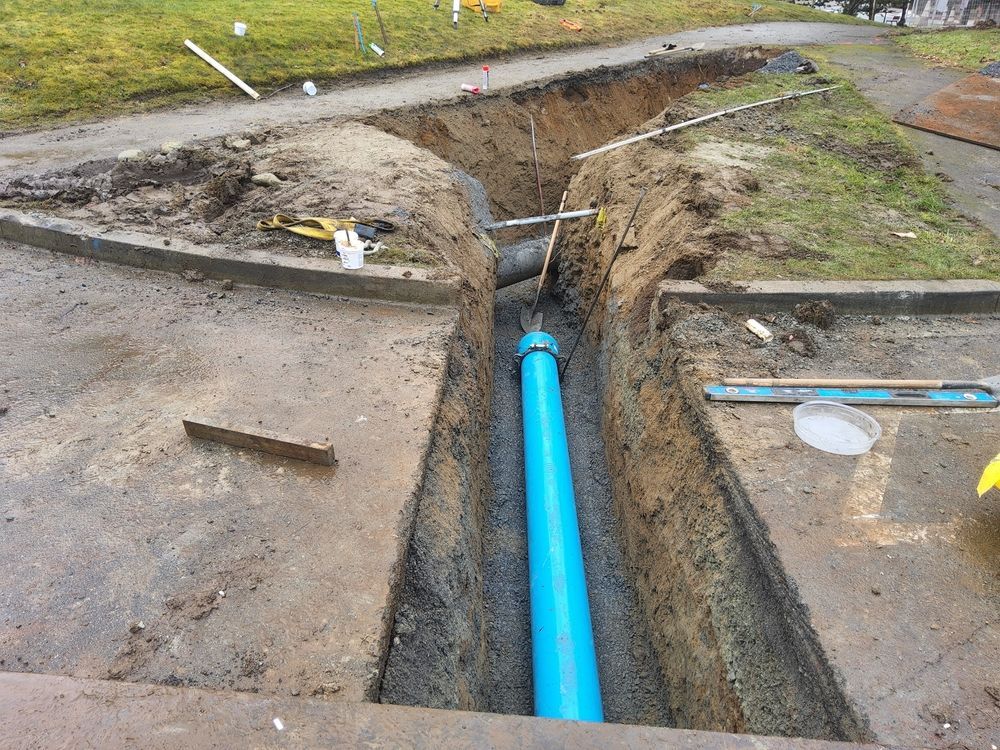
Trench and Backfill for Underground Line Installation
Utility Work in Epsom for properties needing water line installation, sewer connections, or underground electrical and communication trenching
SK Excavation performs precision trenching and excavation to support utility installations on residential and small commercial sites across the Lake Region. You need this service when a new water line must run from the road to your house, when a failed sewer line needs replacement, or when underground electrical or fiber optic cable must be installed below frost depth. The work involves digging to the correct depth and width for the line type, maintaining trench walls safely, and backfilling with compacted material after the utility is placed.
Trenches for water and sewer lines are dug below frost line, typically five to six feet deep in New Hampshire, and graded to ensure proper slope for drainage and flow. Excavation around existing utilities requires hand digging or vacuum excavation in some cases to avoid damaging active lines. Coordination with plumbers, electricians, and inspectors ensures the trench is ready when the line arrives and backfilled correctly after inspection.
If your property needs underground utility installation or line replacement, contact SK Excavation to schedule a quote for utility excavation work in the Lake Region.
How Utility Trenching Is Done Right
The process begins with marking existing utilities using Dig Safe locates, then excavating along the planned route with a trackhoe or trencher depending on depth and soil type. Trench walls are sloped or shored to prevent collapse, and the bottom is leveled or graded to the specified slope for sewer or drainage lines. After the utility is installed and inspected, the trench is backfilled in lifts with soil or stone and compacted to prevent settling.
When the work is finished, you will see a restored surface with no low spots or soft areas where the trench was dug, and the installed utility will function correctly without leaks, sags, or code violations. SK Excavation works closely with contractors to meet project timelines and ensure trenches are ready when crews arrive to install pipe, conduit, or cable.
Trenches dug without proper depth or slope can cause frozen water lines, backed-up sewer flow, or failed electrical conduit. Backfill must be placed in layers and compacted to match the surrounding soil density, and trench width must allow room for bedding material around the pipe. Utility work also includes connecting to existing lines, installing cleanouts or valve boxes, and coordinating with municipal inspectors before final backfill.
Property owners in Epsom often ask about trench depth, timing, and how excavation fits into utility installation schedules and site work in New Hampshire.
Questions About Utility Excavation and Trenching
How deep do water lines need to be buried?
Water lines must be buried below frost depth, typically five to six feet in Epsom, to prevent freezing during winter months.
What happens if the trench crosses ledge or large rocks?
Ledge is broken with a hydraulic hammer or drilled and blasted if depth and width cannot be achieved through excavation alone, then backfilled with suitable material around the utility.
How long does utility trenching take for a residential property?
Trenching and backfill for a single utility run typically takes one to two days depending on distance, soil conditions, and whether ledge or other obstacles are encountered.
Why does sewer line trenching require a specific slope?
Sewer lines must slope at least one-quarter inch per foot so wastewater flows by gravity to the septic system or municipal connection without backing up or pooling in the pipe.
Can multiple utilities be installed in the same trench?
Codes allow certain utilities to share a trench if separation and depth requirements are met, but water and sewer lines must be separated vertically and horizontally to prevent contamination.
SK Excavation handles utility trenching for residential builds, service upgrades, and line replacements throughout the Lake Region. Call to discuss your utility project and get a quote based on trench length, depth, and site conditions.