
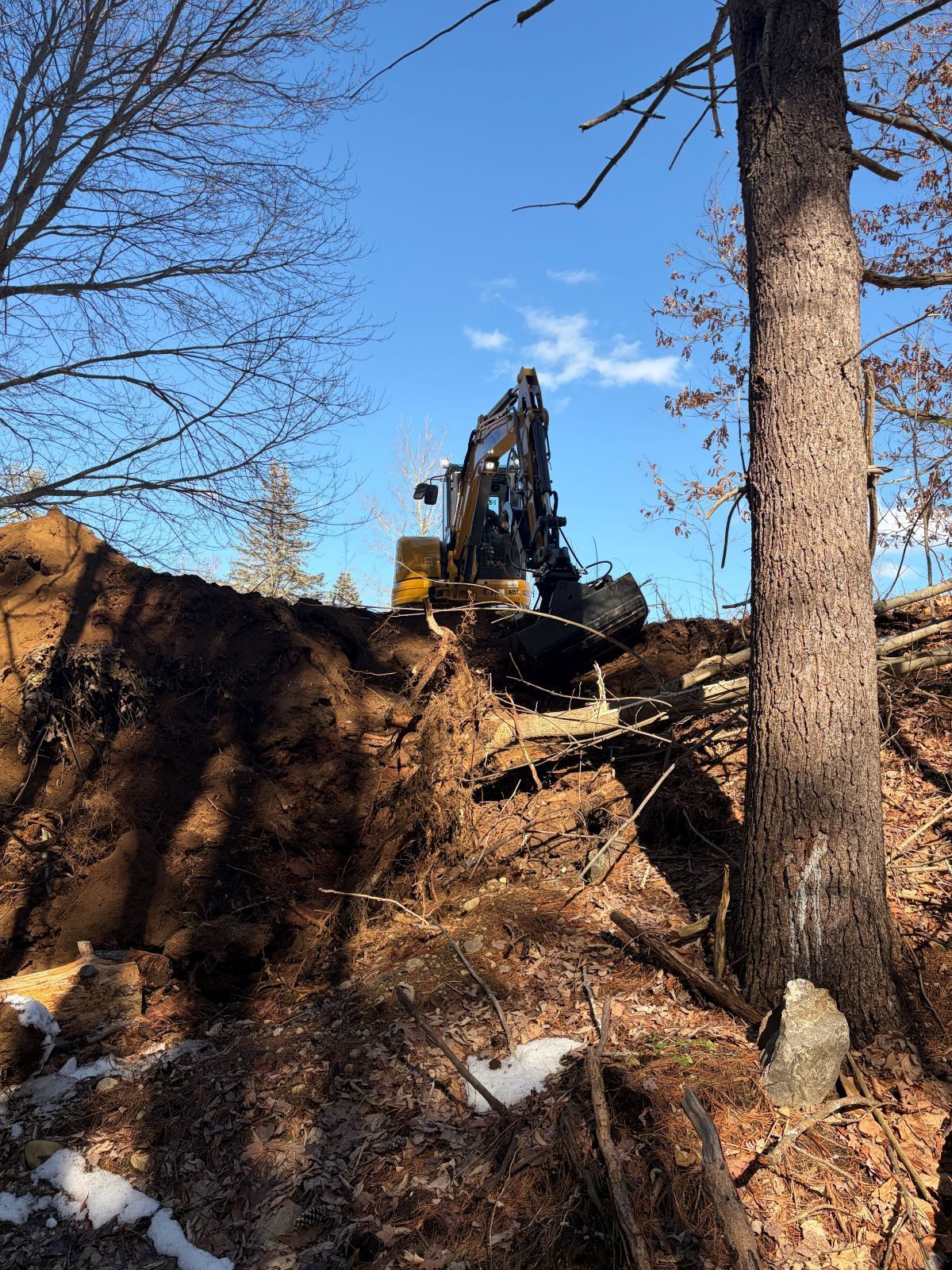
Ground Work Built for Stability and Future Use
General Excavation in Lake Region for new construction, property additions, and uneven terrain that requires controlled digging and grading
SK excavation provides general excavation services across the Lake Region, working within 100 miles of Concord and Epsom, New Hampshire to handle digging, trenching, grading, and land shaping for residential and light commercial projects. You rely on excavation when preparing sites for new construction, building additions, installing driveways, or reshaping land that slopes unevenly or drains poorly. The region's mix of rocky ledge, clay pockets, and seasonal frost heave means the equipment and approach must match what lies beneath the surface.
Excavation involves removing or repositioning earth to create level building pads, drainage channels, or access routes that support the structure or improvement you plan to build. Operators use hydraulic excavators and grading equipment to dig trenches for utilities, cut into slopes for foundations, or strip topsoil before concrete pours. Soil conditions vary widely across wooded hillsides and low-lying areas, so depth, compaction, and drainage become part of every layout decision. Proper excavation prevents settling, pooling water, and misaligned foundations that show up months after construction wraps.
If your property needs controlled digging or grading before construction begins, reach out to discuss the scope and schedule a site visit.
How Excavation Supports Long-Term Structural Integrity
You receive more than a hole in the ground when excavation is done correctly. The crew establishes exact depths for footings, slopes trenches to code for drainage lines, and compacts fill material in lifts to prevent voids that collapse under weight. Equipment operators work from engineering drawings or layout stakes to hold grade tolerances within inches, especially when pouring slabs or setting septic tanks that must meet elevation requirements.
After excavation, you notice clean edges along foundation walls, stable access routes that do not rut under truck traffic, and drainage swales that move water away from building zones. SK excavation coordinates timing with utility installation and concrete contractors so the site stays ready without repeated mobilization costs. The equipment stays on site only as long as active digging or grading continues, reducing compaction damage to areas not involved in construction.
Excavation often includes removing boulders, cutting through hardpan, or widening narrow access lanes that limit material delivery. Operators identify ledge early to adjust foundation depth or recommend blasting if rock extends below footing level. Grading work finishes with rough slopes that direct surface runoff and prepare subgrades for gravel or pavement. The service does not include utility hookups, septic system installation, or final landscaping, though it sets the base conditions that make those tasks possible.
Excavation projects in the Lake Region account for frost depth, seasonal water tables, and limited road access that affects equipment choice and haul routes. The answers below address common questions about timing, site conditions, and what you can expect during the work.
Details That Shape Excavation Planning
What determines how deep trenches need to be for utilities?
Utility depth follows local frost line requirements and the type of line being installed, typically four feet for water and sewer to prevent freeze damage during winter months.
How does soil type affect the excavation timeline?
Rocky or clay-heavy soils slow digging and may require hydraulic hammers or larger machines, while sandy or loamy ground moves faster but needs more attention to trench wall stability.
When should excavation happen relative to other site work?
Excavation occurs after clearing and staking but before concrete work or utility installation, so the ground is open and ready when trades arrive on schedule.
Why does compaction matter for areas that will be paved or built on?
Uncompacted fill settles unevenly under load, causing cracks in driveways or gaps beneath foundation slabs that let water migrate toward living spaces.
What site conditions in Lake Region require adjusted equipment or methods?
Steep slopes, wetland buffers, and narrow woodland driveways often require tracked excavators with tight swing radius and careful staging to avoid damaging trees or septic areas.
SK excavation works with property owners, builders, and contractors who need accurate earthwork before construction starts. If your project involves digging, grading, or land shaping, contact the team to request a quote and arrange a walkthrough of the site.