
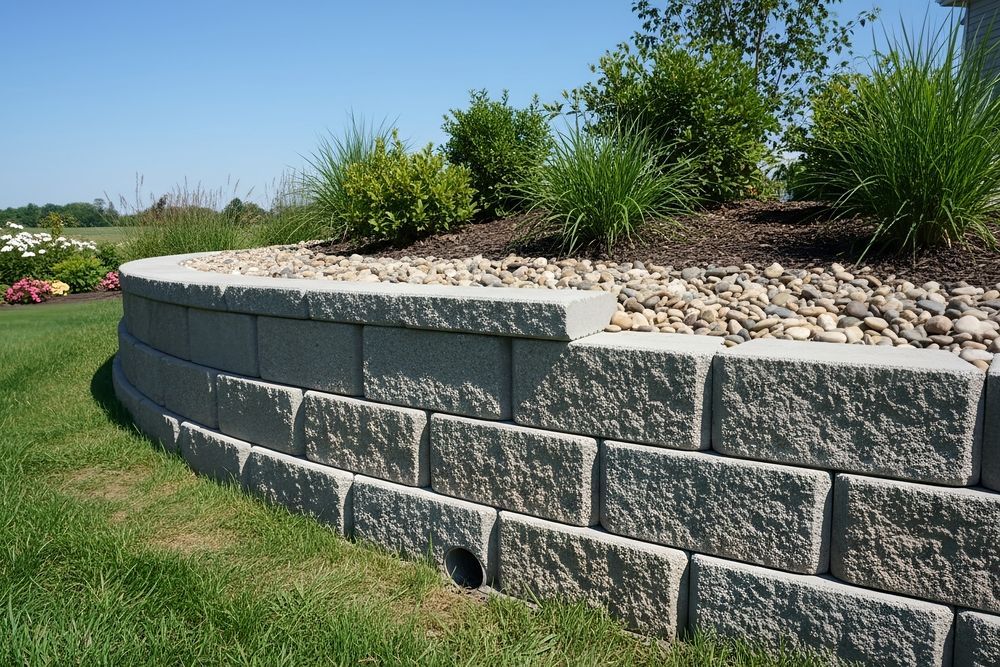
Stabilize Slopes With Engineered Stone Systems
Retaining Walls in Epsom for properties with erosion damage, shifting soil, or steep grades that limit usable yard space
SK Excavation builds retaining walls that stop erosion and restore structural stability on sloped properties across the Lake Region. You need this service when part of your yard is washing out after rain, when a hillside is too steep to plant or mow, or when soil movement threatens a driveway or foundation. The work involves excavating the slope to a stable grade, installing a drainage system behind the wall, and laying engineered stone or block that holds the earth in place without shifting under pressure.
Each wall is designed based on the height of the slope, the type of soil, and the weight it will carry. On properties with ledge or clay, excavation depth and drainage placement change to prevent water from building up behind the stone. Walls that also support driveways or pathways require deeper footings and compacted aggregate base layers that distribute weight evenly across the structure.
If your property has uneven terrain or visible soil movement, contact SK Excavation to schedule a retaining wall consultation in the Lake Region.
How Retaining Walls Are Built to Last
The process starts with excavation to reach stable soil, followed by grading the base so the first course sits level and drainage water flows away from the structure. Geotextile fabric goes in behind the wall, then crushed stone backfill that allows water to pass through without eroding the soil. Each course of block is set with a backward tilt that locks the wall into the slope, and cap stones are mortared or pinned to prevent shifting.
After the wall is finished, you will see a clean vertical face where the slope used to wash out, a stable surface above the wall where you can plant or build, and no standing water along the base. SK Excavation integrates retaining walls with grading and excavation work so the surrounding property drains correctly and the soil behind the wall stays compacted.
Walls built without proper base preparation or drainage will lean forward or crack within a few seasons. The stone must sit on compacted aggregate, not topsoil, and the backfill must include perforated pipe that carries groundwater to daylight or a drainage outlet. Decorative veneers and mortared stone require different footing systems than modular block walls.
Most questions about retaining walls involve how high they can be built, how drainage is handled, and how long the work takes on steep or rocky sites common in New Hampshire.
What to Expect During Retaining Wall Projects
How high can a retaining wall be built without additional engineering?
Walls under four feet typically do not require stamped engineering drawings, but taller walls or those supporting structures need calculations for soil pressure and footing depth.
What happens to water that collects behind the wall?
Perforated drain pipe is installed in the crushed stone backfill and routed to an outlet downslope so water does not build hydrostatic pressure against the stone.
How long does installation take on a sloped yard?
A standard residential wall takes two to four days depending on access, wall height, and whether ledge needs to be removed before excavation begins.
Why does the wall need to tilt backward?
The setback angle keeps each course locked into the hillside and prevents the wall from leaning forward as soil settles and frost moves through the ground in Epsom.
Can a retaining wall be added to an existing driveway?
Yes, if the driveway edge is failing or eroding, a wall can be built along the downhill side with a footing that extends below the gravel base of the drive.
SK Excavation works with property owners throughout the Lake Region to design walls that match the slope, soil type, and intended use of the space above. Reach out to discuss your site conditions and get a retaining wall estimate based on wall length and excavation requirements.